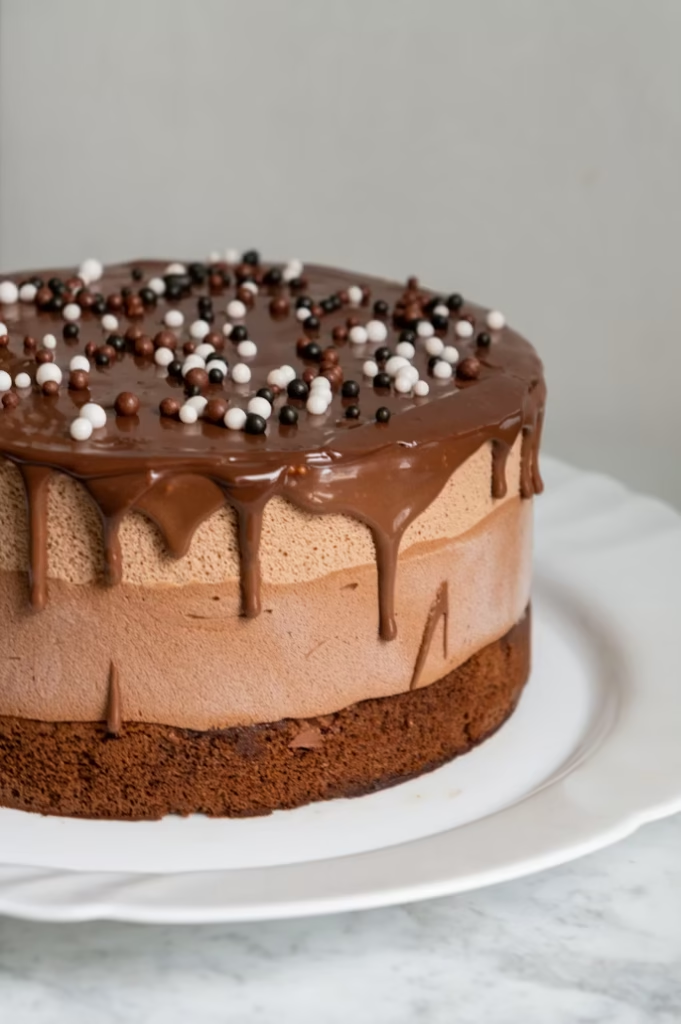
Vegan Cake
The Sweet Revolution: Why Vegan Cake Is Taking Over Bakeries Everywhere
There’s a quiet revolution happening in the world of baking, and it smells absolutely delicious. Walk into any modern bakery, scroll through a food blog, or attend a birthday party these days, and chances are you’ll encounter a vegan cake that stops you in your tracks. Rich, moist, beautifully decorated, and entirely free from animal products — the rise of plant-based baking has completely changed what we expect from our desserts.
But how did we get here? And why has the humble vegan cake become such a cultural phenomenon?
The Old Stigma Is Gone
For a long time, “vegan baking” was practically a punchline. People imagined dense, gummy loaves that crumbled at the touch, or frosting that tasted faintly of coconut oil no matter what flavour it was supposed to be. The idea that a vegan cake could be indistinguishable from — or even better than — its conventional counterpart seemed laughable to most home bakers and professional pastry chefs alike.
That era is firmly behind us. Thanks to a surge of innovation in plant-based ingredients, a passionate community of recipe developers, and the sheer determination of bakers who refused to accept second-best results, the modern vegan cake is a triumph of flavour, texture, and creativity. Aquafaba — the liquid from a tin of chickpeas — whips into perfect meringue. Flaxseed mixed with water creates a binding gel that rivals eggs in almost every application. Cashew cream, oat milk, and coconut cream have unlocked frosting and ganache possibilities that feel completely luxurious.
The Science Behind the Magic
Baking is, at its heart, a science. Every ingredient plays a specific role: eggs provide structure and moisture, butter adds richness and helps with leavening, milk contributes to browning and texture. When you remove all of those components simultaneously, you need to understand exactly what you’re replacing — not just swap one ingredient for another and hope for the best.
Skilled bakers who specialize in vegan cake know that apple cider vinegar combined with plant-based milk creates a buttermilk substitute that reacts beautifully with bicarbonate of soda, producing a tender, airy crumb. They know that a ripe banana or a spoonful of smooth nut butter can add moisture and binding power that makes a chocolate sponge feel decadent rather than dry. They know that the right ratio of baking powder to flour can compensate for the lack of eggs in a way that produces a rise so consistent it would make any traditional baker envious.
This is not accidental baking. It is deliberate, thoughtful, and deeply skilled work.
Flavours That Celebrate Plants
One of the most exciting things about vegan cake culture is how it has pushed bakers to think more creatively about flavour. When you’re already working outside the conventional rulebook, you’re also more likely to experiment with unexpected combinations. The result is a world of baked goods that feels genuinely exciting rather than formulaic.
Consider a tahini and dark chocolate layer cake sweetened with maple syrup, its frosting whipped from coconut cream and dusted with sesame brittle. Or a blood orange and cardamom loaf cake glazed with a simple icing spiked with rose water. A vegan cake made with roasted beetroot and cocoa powder produces a colour so deep and rich it looks almost theatrical on a dessert table. Matcha, miso, black sesame, passion fruit, and lavender have all found their way into plant-based baking, bringing a sophistication that goes far beyond novelty.
Plants are not a limitation. They are the inspiration.
Baking for Everyone
Perhaps the most meaningful shift that the vegan cake movement has brought about is a growing culture of inclusive baking. When you make a cake that contains no eggs, no dairy, and no honey, you’ve automatically created something that works for a much wider group of people. Guests with dairy allergies, those following a plant-based diet for ethical or environmental reasons, people observing certain religious dietary requirements, and those who simply prefer lighter desserts can all sit at the same table and enjoy the same slice.
This inclusivity matters. Food is fundamentally about togetherness, and a vegan cake on the dessert table sends a clear message: everyone is welcome here, and no one has to compromise on joy.
The Environmental Argument
It would be incomplete to talk about vegan cake without acknowledging the environmental dimension. The production of eggs and dairy contributes significantly to greenhouse gas emissions, land use, and water consumption. Choosing plant-based alternatives — even just occasionally, even just for a birthday cake — is a small but genuine act of environmental consideration.
This doesn’t mean every slice of vegan cake needs to come with a lecture. The beauty of plant-based baking at its best is that it lets the food do all the talking. When someone takes a bite of a perfectly frosted carrot cake made with oat milk and flaxseed, they’re not thinking about carbon footprints. They’re thinking about how good it tastes, and wondering if they can have another slice.
Getting Started at Home
If you’ve never tried making a vegan cake at home, the barrier to entry is much lower than you might think. Start simple: a one-bowl chocolate cake made with plant-based milk, oil, coffee, and cocoa powder requires almost no specialist knowledge and consistently produces spectacular results. From there, you can experiment with aquafaba meringues, cashew-based cheesecakes, and layered celebration cakes decorated with whipped coconut cream and fresh berries.
The online baking community is generous, enthusiastic, and full of tested recipes that have been refined through hundreds of iterations. You don’t need to start from scratch — you just need to start.
A Lasting Change
The rise of vegan cake is not a trend that will quietly fade when the next food movement arrives. It reflects something deeper: a shift in how we think about food, ethics, the environment, and what delicious really means. It proves that constraints can be creative catalysts, that compassion and indulgence are not opposites, and that a really good cake — regardless of what’s in it — has the power to bring people together in the best possible way.
So the next time you see a vegan cake on the menu, order a slice. You might just be surprised.